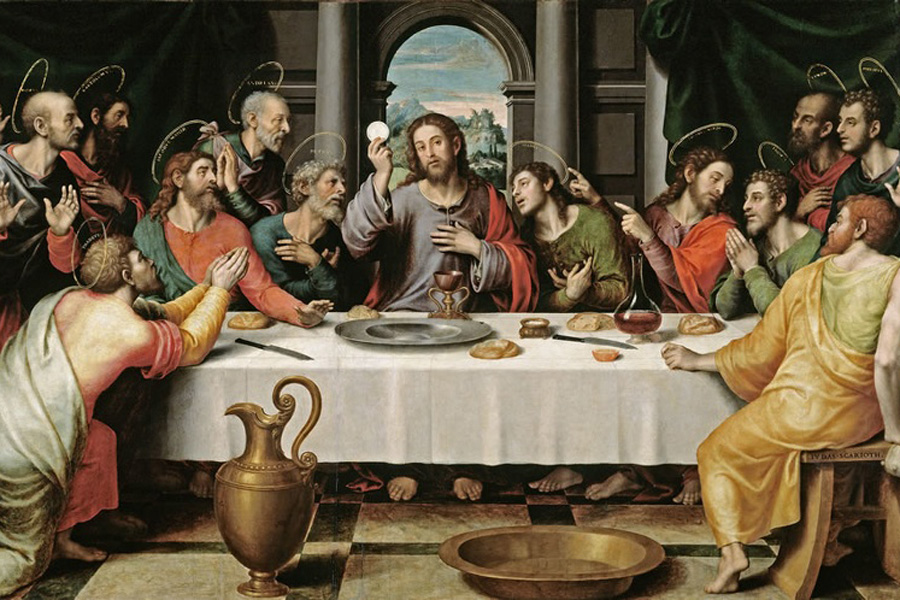
The Most Holy Body and Blood of Christ
by Fr. John Granato | 06/07/2026 | Words from Fr. JohnMy Dear Friends,
Today, we celebrate the great solemnity of the Body and Blood of Jesus Christ. After the Trinity, the Real Presence of Jesus Christ in the Eucharist is a central dogmatic statement of our faith. The official term used in Catholic theology is “transubstantiation”.
It is a philosophical term that uses Aristotelian reasoning to explain a theological reality. Theologians use this term with the words substance and accidents. Aristotle would say that all created things have substance, that which makes something what it is, and that object also has accidents, meaning something not essential to the being.
For example, the substance of the dog is its dogness, but the different color of fur is accidental to the substance of that dog. If you cut the fur off, or change the color of the fur, you are not changing the essence (or substance) of the dog.
So, in the Eucharist, we use bread and wine. When the words of consecration are spoken by the priest, the substance of bread and wine is changed to the body and blood of Jesus Christ, but the accidents of the bread and wine remain. It is no longer bread, nor is it wine, but the taste and texture gives us the semblance of bread and wine.
Even though it is the Body of Christ, the wafer can become stale or moldy because the accidents remain. Even though it is the Blood of Christ, if you drink too much of it, you will still get inebriated because the alcoholic content remains even after consecration.
In any event, the Real Presence of Jesus Christ has been taught since the Gospel of John and developed from that time through St. Paul, St. Ignatius of Antioch, St. Augustine, St. Thomas Aquinas, St. Pius V, St. Pius X, up to the current day.
We are eating the fruit of the Tree of Life (that tree being the cross, and the fruit being Jesus Himself). When we approach the altar to receive, we are mindful of who we are receiving and approaching in reverence.
We should also be mindful of whether we are prepared to receive our Lord worthily or if we need to abstain from Holy Communion.
Corpus Domini nostri Iesu Christi custodiat animam tuam in vitam aeternam.
BACK TO LIST